What Candor users actually want
Mimir analyzed 3 public sources — app reviews, Reddit threads, forum posts — and surfaced 8 patterns with 6 actionable recommendations.
This is a preview. Mimir does this with your customer interviews, support tickets, and analytics in under 60 seconds.
Top recommendation
AI-generated, ranked by impact and evidence strength
Build an AI proposal co-pilot that generates 80% of first drafts from company data and templates
High impact · Large effort
Rationale
Users currently start every proposal from scratch, creating massive time burden and directly limiting how many funding opportunities they can pursue. This is the highest-leverage intervention — reducing the baseline effort for proposal creation transforms throughput and removes the primary friction point in the workflow.
The business context shows users are product managers, founders, and engineering leads who need to move fast. Eliminating blank-page friction for proposal drafting directly impacts the primary metric of user engagement and retention, since the alternative is either abandoning opportunities or spending weeks per proposal.
This addresses the core value proposition of winning government funding with AI. Automatic draft generation from existing company assets is the clearest demonstration of AI delivering immediate, measurable value.
Projected impact
The full product behind this analysis
Mimir doesn't just analyze — it's a complete product management workflow from feedback to shipped feature.
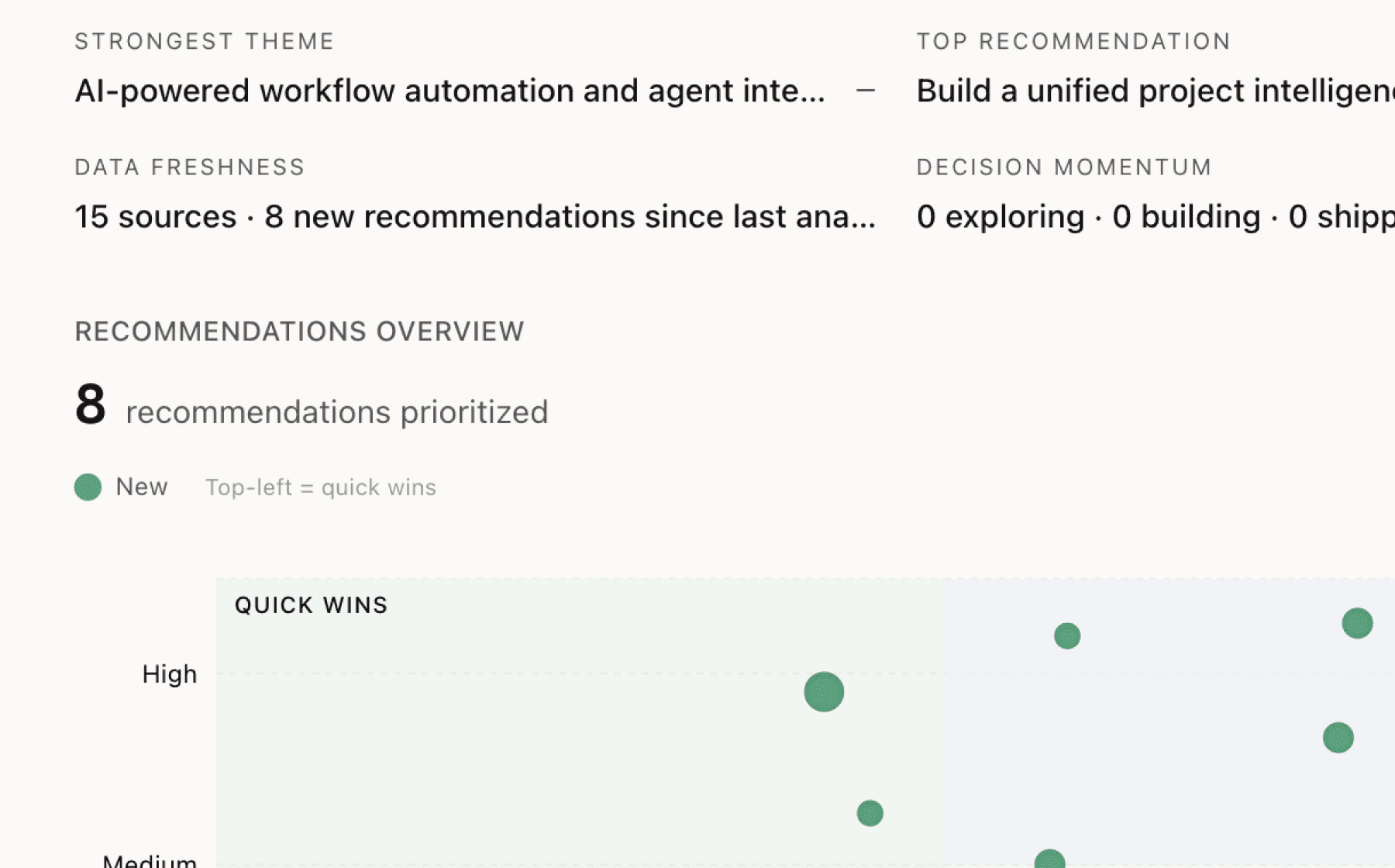
Evidence-backed insights
Every insight traces back to real customer signals. No hunches, no guesses.
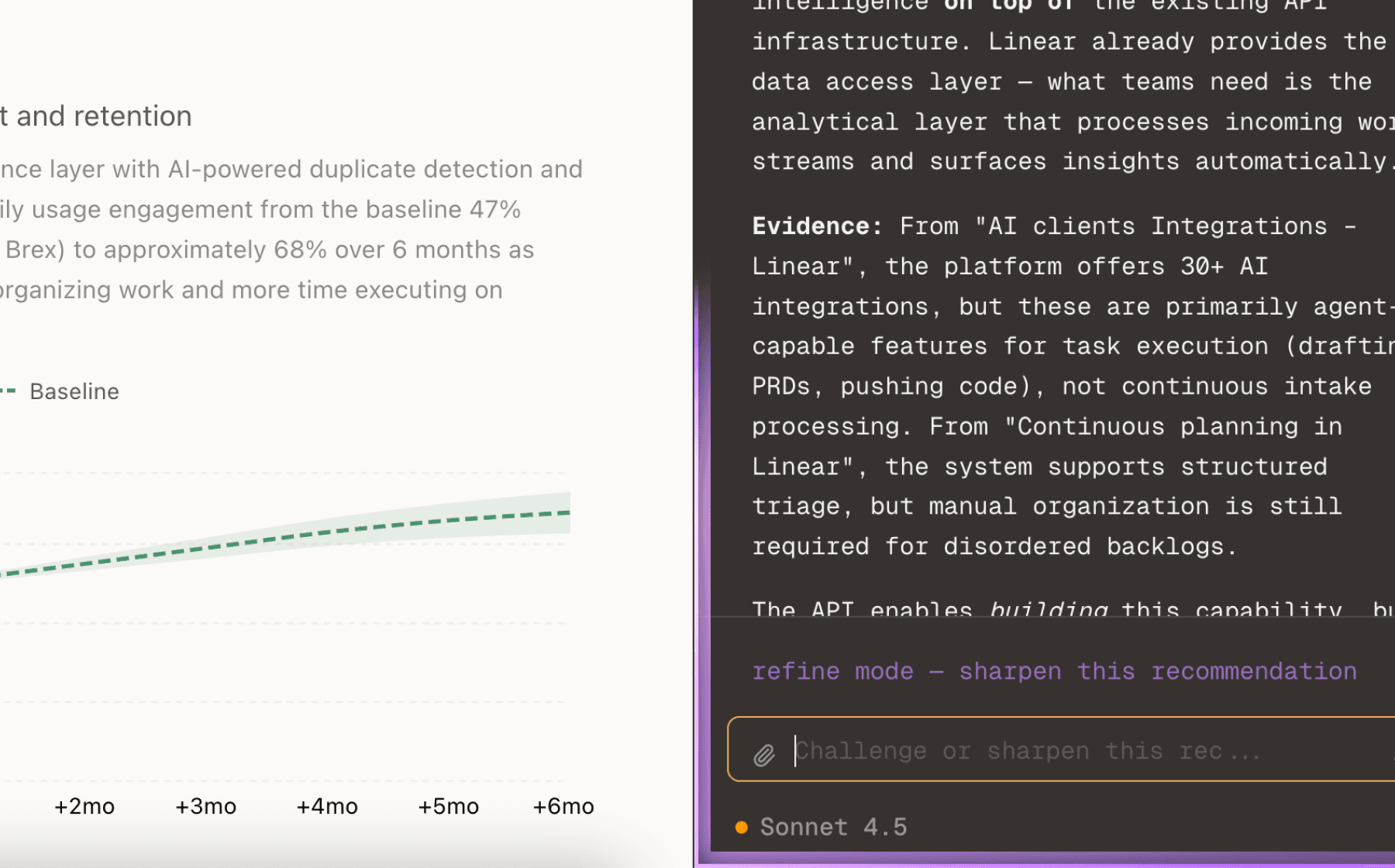
Chat with your data
Ask follow-up questions, refine recommendations, and capture business context through natural conversation.
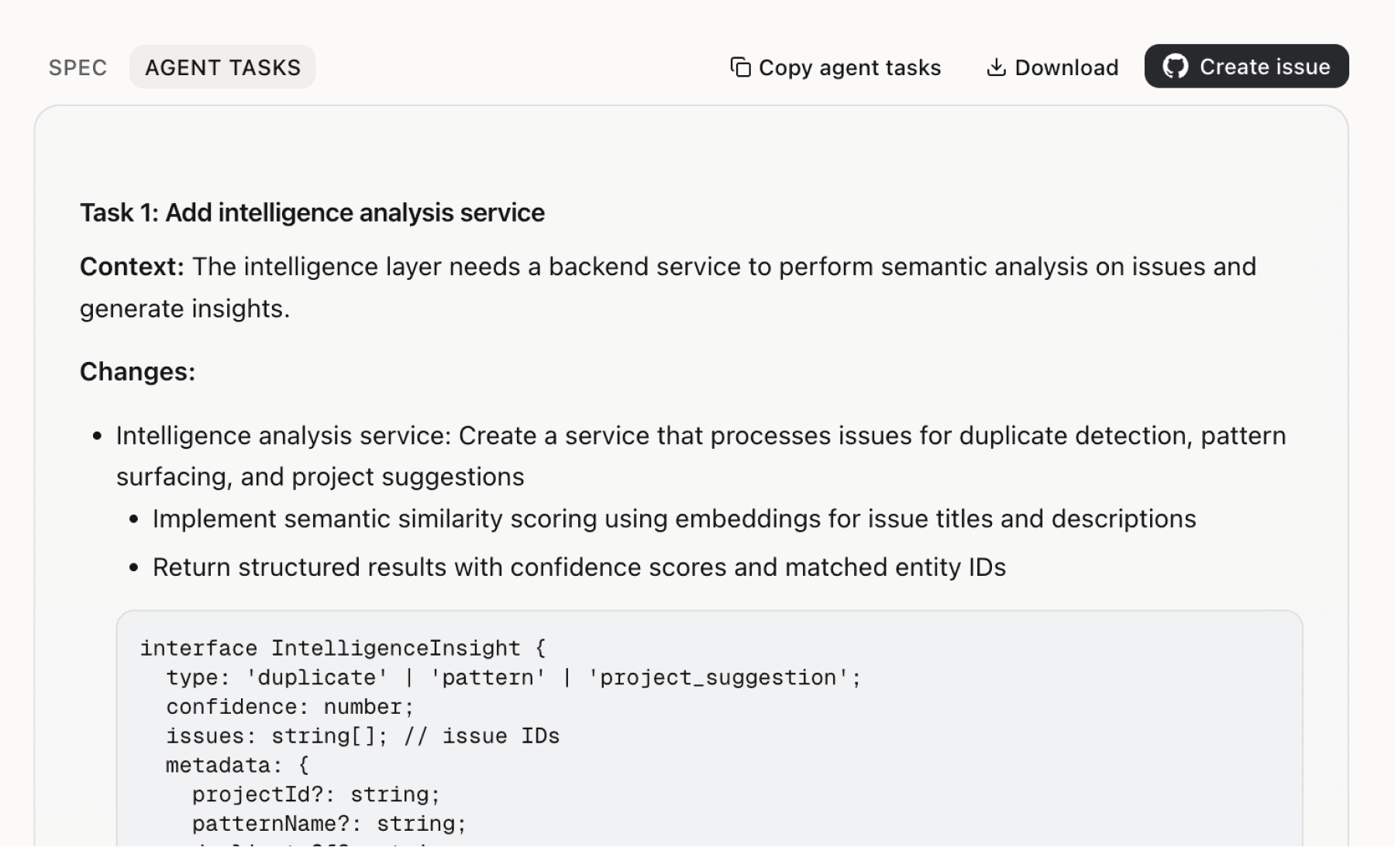
Specs your agents can ship
Go from insight to implementation spec to code-ready tasks in one click.
This analysis used public data only. Imagine what Mimir finds with your customer interviews and product analytics.
Try with your dataMore recommendations
5 additional recommendations generated from the same analysis
Data security concerns are blocking adoption of AI tools for the exact use case Candor targets. Users won't upload sensitive company information or proposal details to ChatGPT because they fear retention and model training. This is a trust barrier that prevents users from even trying AI assistance for proposals.
Compliance failures result in outright rejection or disqualification, meaning direct loss of funded opportunities. This is a binary outcome — non-compliant proposals don't get scored on merit, they're eliminated. Users are acutely aware of this risk and it creates submission anxiety.
Users currently manual-search multiple fragmented portals to find relevant opportunities, which is time-intensive and prone to missing deadlines. Funding discovery friction directly limits how much capital users can pursue — you can't apply for opportunities you don't know exist.
Users lack visibility into proposal quality before submission. Without structured feedback, they don't know if a proposal is competitive or what specific weaknesses need fixing. This creates blind submission — hoping for the best without calibrated confidence.
Reusable proposal artifacts exist but aren't systematically managed, leading to duplicated effort and inconsistency across applications. Users rebuild components (team resumes, technical background, IP descriptions) for each new proposal instead of maintaining a single source of truth.
Insights
Themes and patterns synthesized from customer feedback
Government work was rare for startups four years ago when Candor launched, but this landscape is shifting. The company's founding team has deep government sector experience (defense tech VC, DoD, Space Force), positioning them to capitalize on this emerging trend.
“It was rare for startups to work with US Government 4 years ago when Candor was founded”
Past proposals, resumes, IP documents, and technical data exist but are not tracked or centrally organized for reuse across multiple funding applications. This duplication of effort increases time to draft new proposals and risks inconsistency.
“Document management system tracks updates to past applications, team resumes, IP documents, and technical data for reuse across proposals”
US government funding is increasing significantly in defense, energy, biotech, and quantum sectors, and government-industry cooperation is at a multi-year high. This creates a strong market opportunity for tools that help companies access this capital.
“Silicon Valley and US Government are closer than they've been in decades, with increasing cooperation expected”
Users lack visibility into proposal quality metrics or structured feedback on what's missing or weak. Candor addresses this with AI scoring and flagged deficiencies, suggesting this is a meaningful gap in users' current workflows.
“AI scoring system provides visibility into proposal quality with actionable feedback (e.g., missing details flagged with AI Score: 40)”
Relevant funding opportunities are scattered across multiple government portals (SAM.gov, Grants.gov, DSIP) requiring manual, ongoing search efforts. Users lack a consolidated, proactive notification system to identify matching opportunities without constant portal checking.
“AI-enabled search engine that automatically notifies users of relevant SBIR solicitations, eliminating need to manually search SAM.gov, Grants.gov, or DSIP”
Technical non-compliance in proposal formatting, requirements, and structural details results in rejected or disqualified applications, representing direct financial loss. This is a high-stakes failure mode that users actively fear.
“Companies risk losing funded opportunities due to technical compliance failures in proposal formatting or requirements”
Users are hesitant to use commodity AI tools like ChatGPT for government proposals due to concerns that proprietary company information and proposal details may be retained or used for model training. This creates a barrier to adopting AI assistance for a key workflow.
“Concern about data security when using generic AI tools like ChatGPT for sensitive company proposal information”
Users currently start proposal drafting with no structured assistance, leading to inefficient use of time and resources. This manual process is a core pain point that directly impacts productivity and the ability to respond to funding opportunities quickly.
“Proposal writers currently start from scratch when drafting government funding applications”
Run this analysis on your own data
Upload feedback, interviews, or metrics. Get results like these in under 60 seconds.