
What Librar Labs users actually want
Mimir analyzed 1 public source — app reviews, Reddit threads, forum posts — and surfaced 9 patterns with 7 actionable recommendations.
This is a preview. Mimir does this with your customer interviews, support tickets, and analytics in under 60 seconds.
Top recommendation
AI-generated, ranked by impact and evidence strength
Build a self-serve onboarding flow that gets schools from signup to first circulating book in under 48 hours
High impact · Medium effort
Rationale
Schools face weeks or months to set up libraries, and 98% of schools globally lack library systems entirely. The data shows Librar already dramatically reduces setup time, but the real barrier is getting started. A guided, self-serve flow that walks non-librarians through inventory upload, basic classification, and first checkout would convert the massive untapped market into daily active users.
The evidence shows schools value simplicity over complexity, and Librar is already simple enough for non-librarians to use without training. Converting that value proposition into a structured onboarding experience addresses both the librarian shortage and the time burden themes simultaneously.
This directly impacts new user growth by lowering activation friction, and retention by ensuring users experience core value before they can abandon the product. Schools that get books circulating quickly become sticky users who generate daily activity.
Projected impact
The full product behind this analysis
Mimir doesn't just analyze — it's a complete product management workflow from feedback to shipped feature.
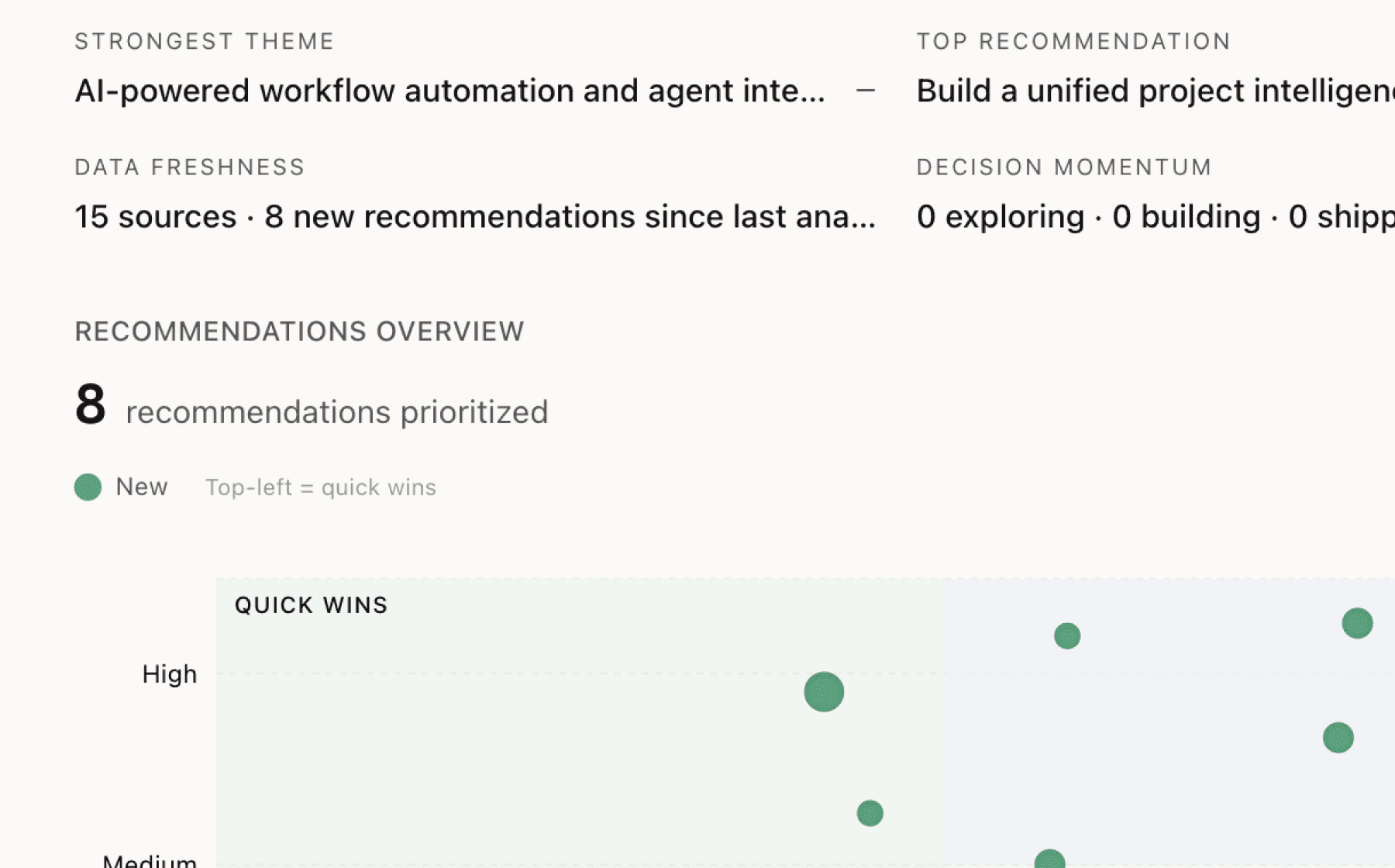
Evidence-backed insights
Every insight traces back to real customer signals. No hunches, no guesses.
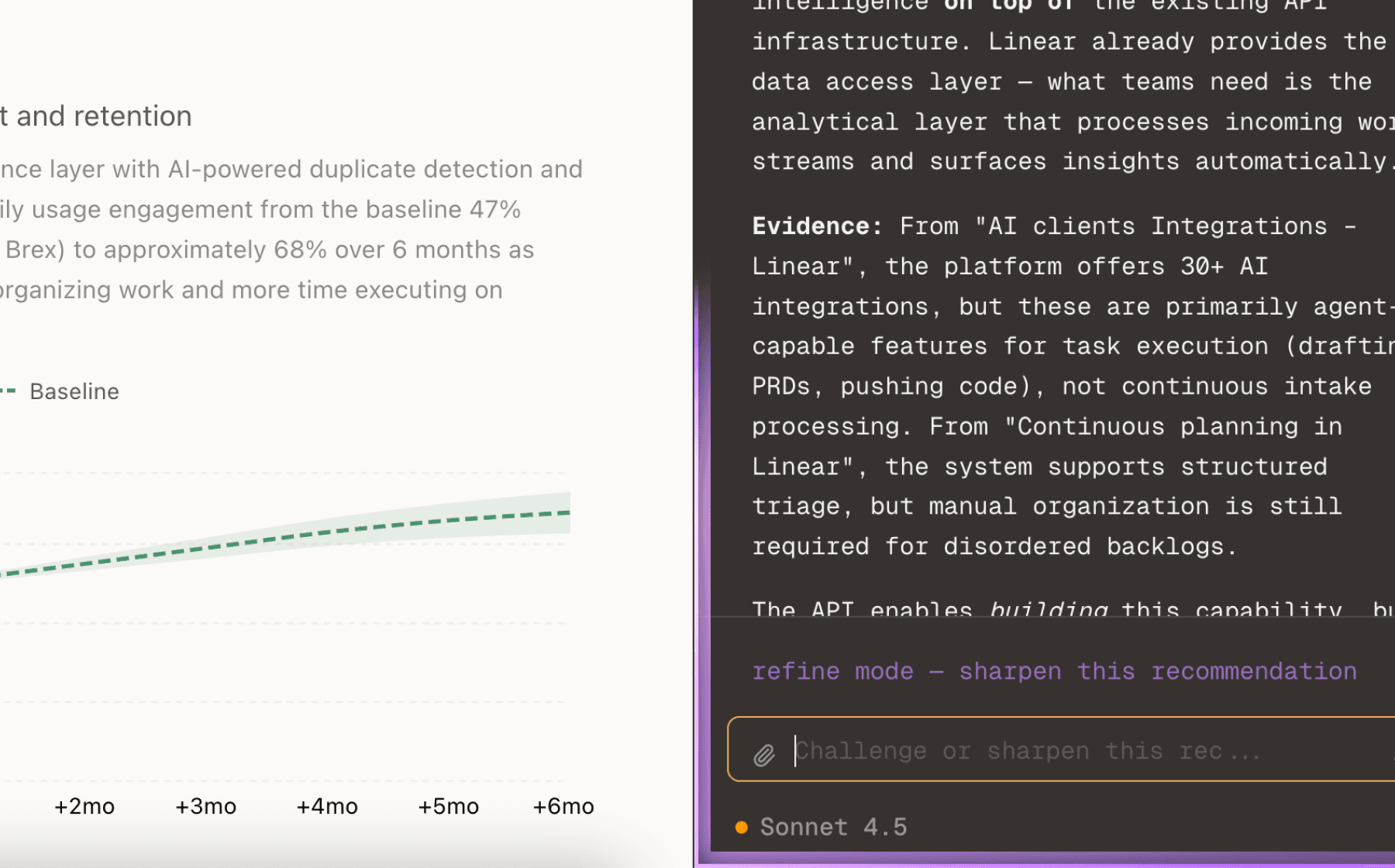
Chat with your data
Ask follow-up questions, refine recommendations, and capture business context through natural conversation.
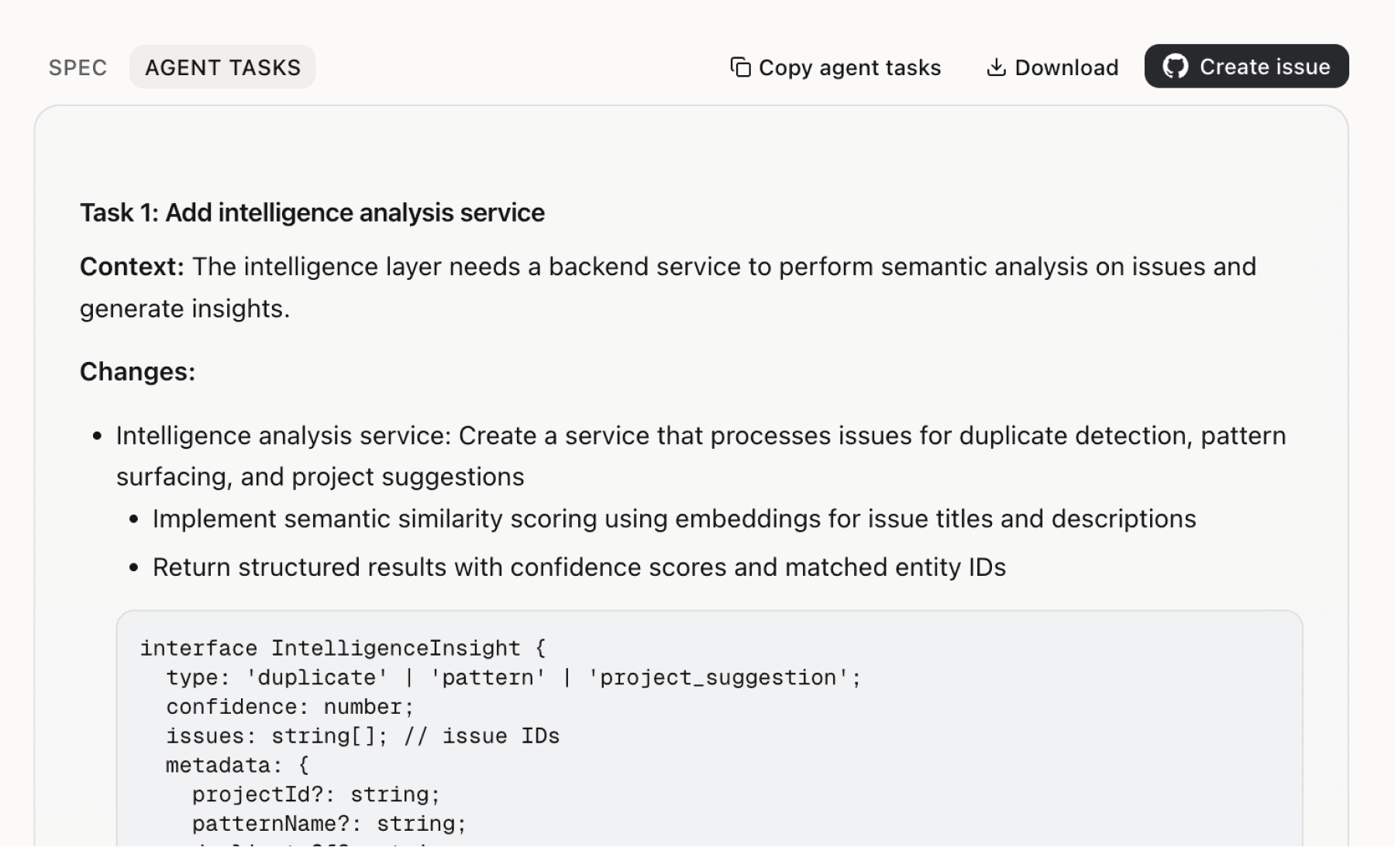
Specs your agents can ship
Go from insight to implementation spec to code-ready tasks in one click.
This analysis used public data only. Imagine what Mimir finds with your customer interviews and product analytics.
Try with your dataMore recommendations
6 additional recommendations generated from the same analysis
Many schools run libraries with teachers or untrained staff because they cannot hire librarians. This is not a temporary staffing problem but a structural reality for most of the 98% of schools without library systems. Positioning Librar as the solution for schools that will never have a professional librarian opens a distinct market segment.
Schools using Librar report increased reading activity, but this outcome is not surfaced as a visible, shareable metric within the product. Schools need to justify library investments to administrators and boards, especially in under-resourced settings. A dashboard showing circulation trends, popular titles, and reading growth over time turns Librar from an operational tool into a strategic asset.
The product already supports mobile bulk scanning as part of Librar Intelligence, but the broader setup and management workflows still require desktop access. Schools without dedicated library spaces or IT infrastructure need to complete setup and ongoing management entirely from mobile devices. This is especially relevant for the 98% of schools without existing systems, many of which are in resource-constrained environments.
Schools value vendor responsiveness and partnership, as shown by the quote about finding a system that just made sense. However, responsiveness alone is reactive. A structured program that reaches out at key milestones (day 7, 30, 60, 90) with targeted guidance, best practices, and celebration of wins would convert initial adoption into long-term retention.
Schools already manage student rosters, schedules, and permissions in other systems. Requiring duplicate entry into Librar creates friction and increases the time burden that the product is designed to eliminate. Integration with common school information systems would automate student onboarding and keep data synchronized.
The geographic diversity evidence shows Librar already has traction across regions and school types, creating a network of satisfied users. These schools are natural advocates for peer institutions facing the same setup and staffing challenges. A referral program converts passive satisfaction into active growth.
Insights
Themes and patterns synthesized from customer feedback
The product is used by private schools across Sweden and hundreds of schools worldwide, indicating successful market penetration across regions and institutional types. This geographic and institutional diversity suggests scalable business model and repeatable adoption patterns.
“Librar is used by private schools across Sweden and hundreds of schools worldwide”
Features like mobile bulk scanning, smart recommendations, smart shelf sorting, and smart purchasing provide intelligent assistance beyond basic inventory management. These capabilities may drive higher retention and daily engagement by reducing friction in core library operations.
“Librar Intelligence feature enables mobile bulk scanning, smart recommendations, smart shelf sorting, and smart purchasing”
Librar supports ISBN, unique barcodes, and RFIDs for inventory management, enabling schools to work with existing materials and infrastructure. This flexibility reduces switching costs and barriers to adoption for institutions with existing collection management practices.
“Product supports ISBN, unique barcodes, and RFIDs for inventory management”
With 20% of high school graduates functionally illiterate and low adult literacy costing the U.S. economy $2.2 trillion annually, expanding school library access addresses a critical societal problem. This provides strong mission alignment and potential for impact-driven growth strategies.
“Low adult literacy rate costs U.S. economy $2.2 trillion annually; 20% of high school graduates are functionally illiterate”
Users explicitly prioritize products that are intuitive and avoid unnecessary complexity, while also valuing attentive vendor support and partnership approach. This suggests retention and growth are tied to both product simplicity and customer-centric service delivery.
“We looked at other systems, but they were either too complicated or too simple. Librar just made sense. The team was easy to work with and actually cared.”
Schools using Librar report increased reading activity, suggesting the product has a meaningful impact on its core mission of expanding reading opportunities. This outcome metric directly supports user retention and school satisfaction.
“Increased reading for schools using Librar”
Schools face significant operational friction in setting up libraries and managing physical inventory, with some projects expected to take weeks or months. Librar dramatically reduces this time burden, enabling faster library deployment and allowing librarians to focus on higher-value activities.
“I found 4,500 books that weren't registered. I thought it would take at least a month. I tried Librar, took photos, and a few hours later everything was done.”
Many organizations struggle to hire trained librarians, leaving libraries empty or run by untrained staff. This creates a critical gap where schools lack the expertise to set up and manage library systems effectively. Librar addresses this by enabling non-librarians to operate libraries without specialized training.
“Many organizations struggle to hire trained librarians, so libraries often remain empty or are run by teachers”
The vast majority of schools globally do not have library systems in place, representing an enormous addressable market. This structural gap suggests significant growth potential for a product that simplifies library setup and management for resource-constrained institutions.
“98% of world's schools still don't have a library system”
Run this analysis on your own data
Upload feedback, interviews, or metrics. Get results like these in under 60 seconds.