What Noya Software users actually want
Mimir analyzed 15 public sources — app reviews, Reddit threads, forum posts — and surfaced 14 patterns with 8 actionable recommendations.
This is a preview. Mimir does this with your customer interviews, support tickets, and analytics in under 60 seconds.
Top recommendation
AI-generated, ranked by impact and evidence strength
Build a comprehensive design token editor with export to major frameworks
High impact · Large effort
Rationale
Design token management is the most frequently cited pain point (20 sources) and rated critical severity. Teams struggle with consistency at scale across multiple platforms and spend significant time on manual updates. The data shows teams need robust support for major design system libraries (Chakra UI, MUI, Ant Design) and seamless designer-developer handoffs.
While Noya already supports Chakra UI, the evidence emphasizes that design token implementation requires clear guidelines, hierarchical organization, and ongoing maintenance. A dedicated token editor would address the time-consuming initial setup and make the system more maintainable as design needs evolve.
This recommendation directly supports the core value proposition of enabling non-designers to design like designers. By providing a visual interface for managing tokens with export capabilities, you reduce the complexity barrier and enable product managers and engineers to work within established design systems confidently.
Projected impact
The full product behind this analysis
Mimir doesn't just analyze — it's a complete product management workflow from feedback to shipped feature.
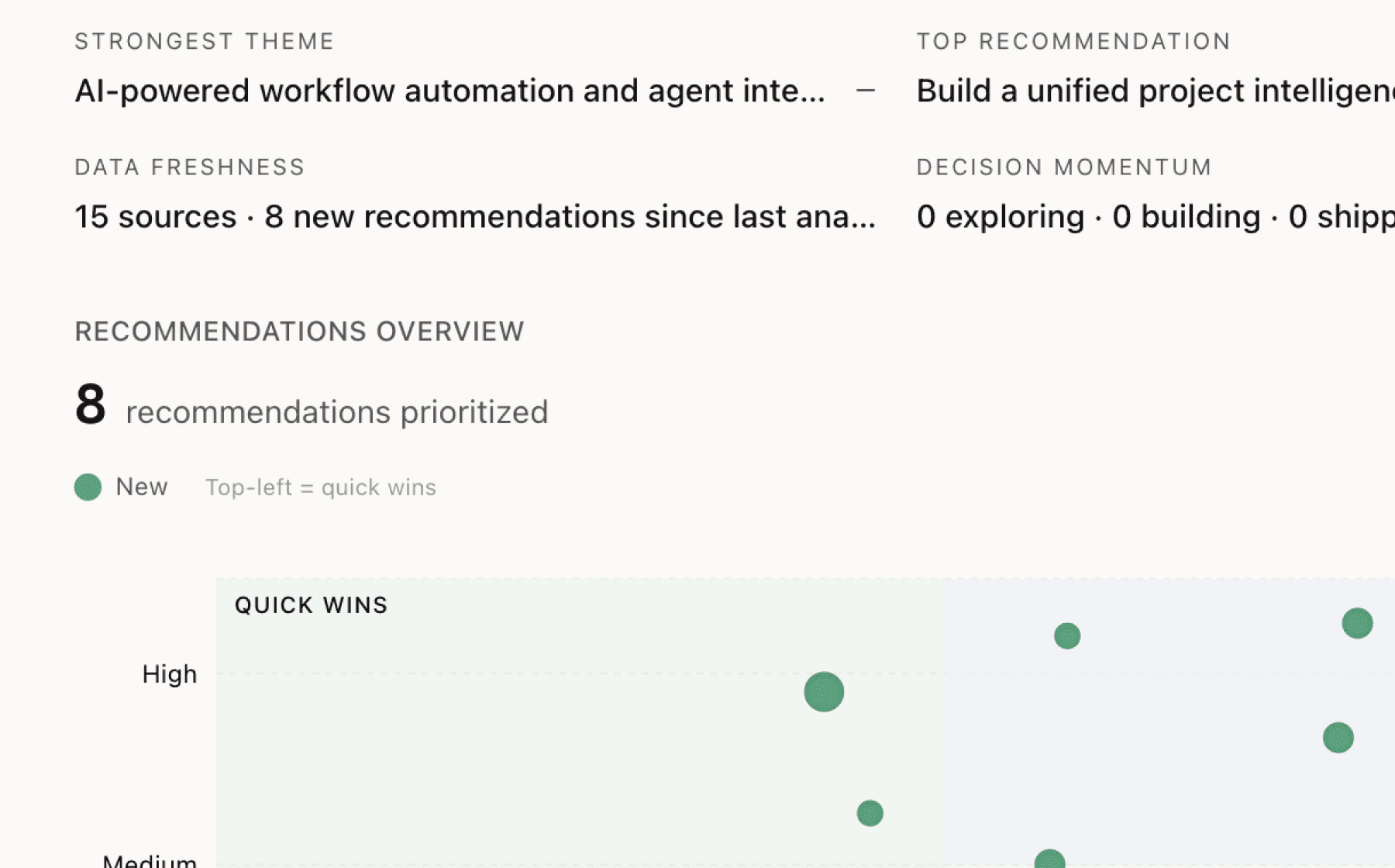
Evidence-backed insights
Every insight traces back to real customer signals. No hunches, no guesses.
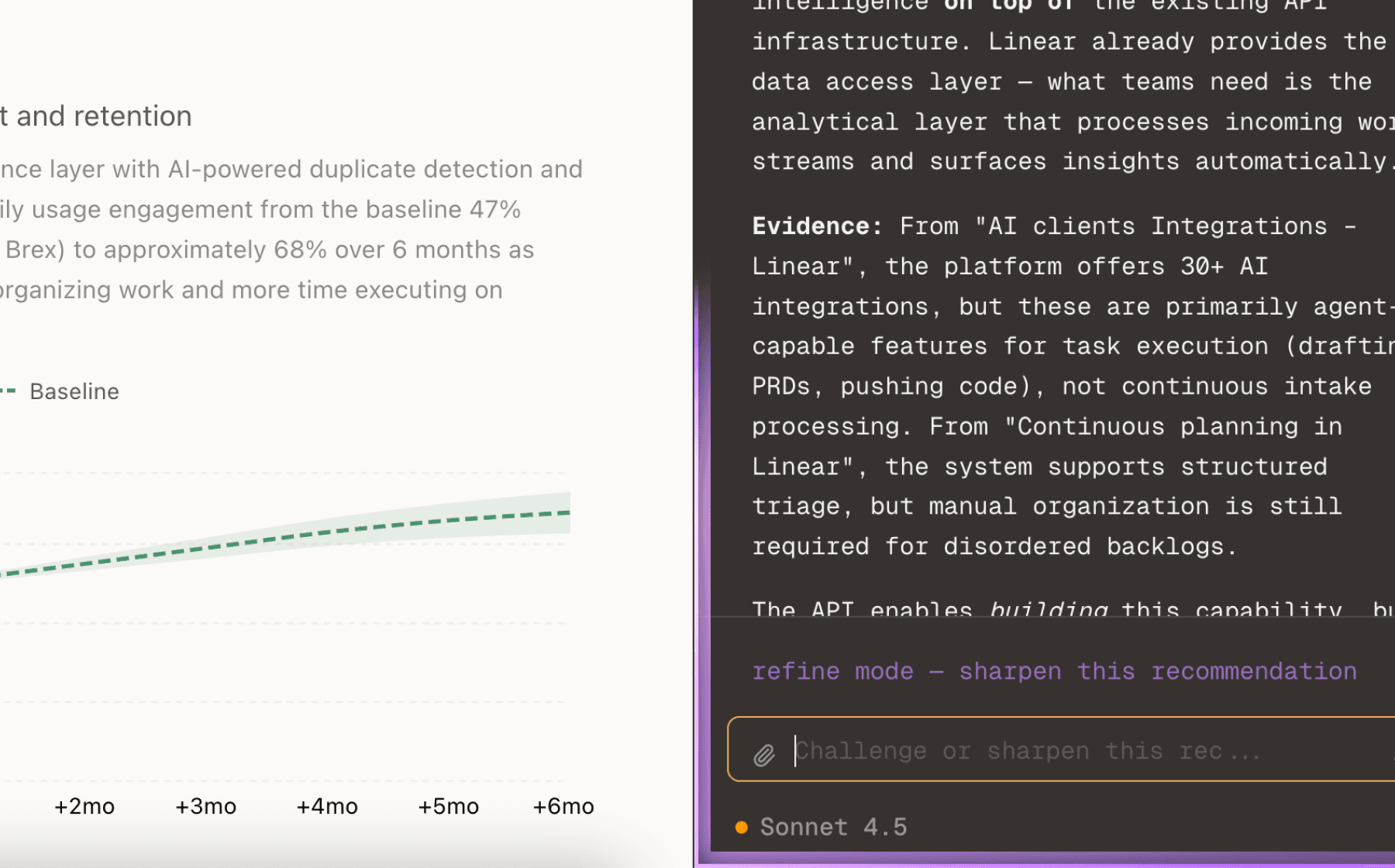
Chat with your data
Ask follow-up questions, refine recommendations, and capture business context through natural conversation.
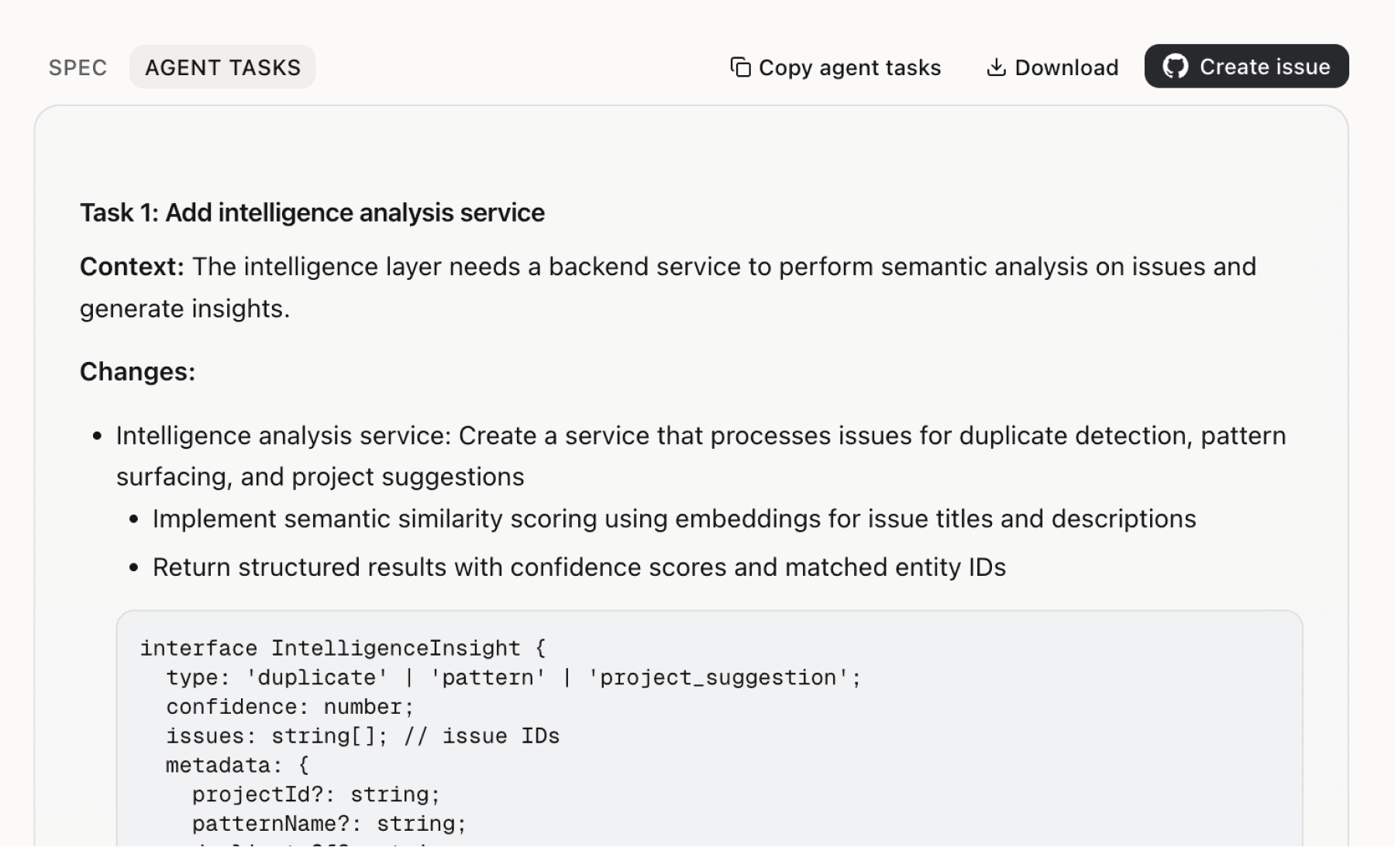
Specs your agents can ship
Go from insight to implementation spec to code-ready tasks in one click.
This analysis used public data only. Imagine what Mimir finds with your customer interviews and product analytics.
Try with your dataMore recommendations
7 additional recommendations generated from the same analysis
Landing page creation addresses a clear business need (12 sources, high severity) and aligns with existing AI capabilities mentioned in the product. Users need to quickly create pages following conversion best practices without manual design work. The evidence shows specific requirements: singular purpose, minimal navigation, strategic CTA placement, mobile optimization, and trust signals.
The template library currently features only single-creator content (8 templates by Devin Abbott), while the platform vision emphasizes ecosystem growth and tool creator monetization. The evidence shows independent creators face significant barriers (complex backend infrastructure, low initial revenue, difficult monetization) that Noya's royalty system is designed to solve.
Real-time collaboration is critical (13 sources) with evidence showing product managers, designers, engineers, and founders need to work together without context switching. The platform already supports composable workflows with embedded files across the workspace, but the evidence points to a gap in how different roles interact with the same design assets.
Landing page users need data-driven optimization (A/B testing headlines, images, copy, CTA placements) to improve conversion rates over time. The evidence shows users understand conversion optimization principles but lack tools to test variations systematically. Your existing analytics infrastructure (Amplitude integration) provides the foundation for tracking variant performance.
Teams struggle with maintaining consistency across platforms and face ongoing maintenance challenges as design systems evolve (20 sources documenting design token pain points). While your AI assistant is marked as 'coming soon' for automating tedious tasks, the evidence suggests a specific high-value application: auditing designs for design system compliance.
The evidence shows independent creators face significant barriers to building tools (complex backend requirements like real-time collaboration, user management, billing) that fall outside typical frontend expertise. Your platform vision emphasizes enabling tool creators through provided infrastructure and royalty-based monetization, but the current Enterprise tier gates tool creation behind the highest pricing level.
The current pricing structure jumps from Professional ($15/month, unlimited files) to Enterprise (custom pricing) with no intermediate tier for growing teams that exceed Professional limits but don't need Enterprise features. The evidence shows Professional tier includes 1 GB storage per workspace member and 3,000 AI generations monthly, suggesting usage constraints that high-engagement teams would hit.
Insights
Themes and patterns synthesized from customer feedback
Noya offers freemium pricing with starter tier (10 projects, 30 AI generations/month) and professional tier ($15/month with unlimited files). Royalty system provides monetization path for indie and open-source tool creators, addressing a key barrier to ecosystem participation.
“Free Starter plan includes 10 projects”
Platform terms allow account suspension without notice and reserve payment failure handling rights, while users remain responsible for credential security. Subscription policies include region-specific consumer protections (EU distance contract rules) and 1-day termination notice.
“Owner can suspend or delete user accounts at sole discretion without notice for inappropriate or offensive content, without compensation obligation”
Noya processes user data through multiple third parties (Amplitude, Stripe, AWS, Netlify, LogRocket, Customer.io, Postmark, Google Tag Manager) for analytics, payments, hosting, and monitoring. Privacy policy includes region-specific sections reflecting different regulatory standards (EU, US, Brazil).
“Data processing involves multiple third parties: analytics (Amplitude), payments (Stripe), hosting (AWS, Netlify, Vultr), monitoring (LogRocket), email (Customer.io, Postmark), tag management (Google...”
Noya has expanded beyond core design with diverse apps including Drive, Page (Markdown editor), Code Screenshot, Whiteboard, Pattern, and games, demonstrating platform ambitions to provide comprehensive coverage of design and development workflows.
“Noya offers a diverse ecosystem of productivity apps (Drive, Page, Code Screenshot, Whiteboard, Pattern) and games (Partymaster, Chess) built on the design platform”
Noya offers multiple sign-in options (Google, GitHub, email link) to reduce friction during signup and onboarding, improving accessibility across different user preferences.
“Sign in page offers multiple authentication options: Google, GitHub, and email link”
Noya reserves discretion over content moderation without prior notice and requires users to waive moral rights in connection with provided content. These policies protect the platform but may create friction with power users or enterprises with strict IP requirements.
“Noya does not filter or moderate user-provided content; Owner reserves right to remove content at own discretion without prior notice”
Users need tools to quickly create landing pages following conversion best practices—including mobile optimization, strategic CTA placement, and minimal form friction—without manual design and coding effort. Effective landing pages require singular purpose, minimal distractions, and performance optimization.
“Landing pages are designed with a single goal: to encourage visitors to take a specific action, such as signing up for trials or requesting demos”
Users need pre-designed template libraries with diverse patterns (dashboards, forms, e-commerce, flows) and style templates to accelerate project kickstart and explore design directions without starting from scratch. Templates with visual previews guide selection and reduce time to first iteration.
“Professional templates available to jumpstart projects”
Independent tool creators face significant barriers: complex backend infrastructure (real-time collaboration, user management, billing) outside typical expertise, low initial revenue, and monetization difficulty. Noya's platform addresses these barriers through provided infrastructure and royalty-based monetization.
“Tool creators focus on frontend/UX but modern tools require complex backend infrastructure (real-time collaboration, user management, permissions, notifications, billing) outside their expertise”
AI capabilities enable domain experts without deep coding knowledge to create sophisticated tools and automate tedious design tasks, lowering barriers to tool creation. This democratizes design and development work beyond specialist teams.
“Software tools for design, video editing, and 3D modeling are entering a golden age where AI models can generate code and enable broader tool creation beyond programmer teams”
Modern design tools require table-stakes features including real-time collaboration, user management, permissions, notifications, file management, version control, and billing. These foundational capabilities are essential to meet user expectations and enable cross-functional workflows.
“Best tools are created by people who understand the problem best, not necessarily the best programmers”
Export functionality is in beta and requires refinement to achieve pixel-perfect accuracy for production handoff. Users need reliable export paths to integrate designs into development workflows with confidence.
“Export functionality is currently in beta and may require adjustments to achieve pixel-perfect accuracy; users are encouraged to test early in design process.”
Teams need robust design token support and integration with major design system libraries (Chakra UI, MUI, Ant Design) to maintain visual consistency across products and platforms while enabling designer-developer collaboration. This addresses a core pain point where teams struggle with consistency at scale and require ongoing maintenance across multiple platforms.
“Noya combines wireframing with design systems to generate high-fidelity designs in real time, enabling users to stay in wireframing mode longer while producing polished design outputs in parallel.”
Product managers, designers, engineers, and founders need to work together in shared workspaces without context switching, leveraging real-time collaboration and multi-role capabilities. Noya's modular ecosystem and instant updates enable cross-functional teams to iterate faster and reduce handoff friction.
“Product is designed to work across multiple user roles: product managers and entrepreneurs for rapid mockups, designers for flexible high-fidelity artifacts, and engineers for interface design and...”
Run this analysis on your own data
Upload feedback, interviews, or metrics. Get results like these in under 60 seconds.