What Perspectives Health users actually want
Mimir analyzed 4 public sources — app reviews, Reddit threads, forum posts — and surfaced 10 patterns with 6 actionable recommendations.
This is a preview. Mimir does this with your customer interviews, support tickets, and analytics in under 60 seconds.
Top recommendation
AI-generated, ranked by impact and evidence strength
Build zero-click consent capture that validates compliance without clinician intervention
High impact · Medium effort
Rationale
Patient consent management appears in 4 sources as a high-severity compliance blocker. Despite offering templates and multiple consent options, it remains an explicit pain point requiring manual management by clinicians. This friction directly contradicts the core value proposition of reducing administrative burden.
The product already demonstrates strong engagement driven by reducing documentation time from 30 minutes to 2 minutes per session. Consent management is the one compliance step that still requires explicit clinician action before using the core recording feature. Users report daily dependency and emotional attachment to the platform specifically because it eliminates after-hours charting work.
A consent system that automatically validates patient consent status from existing intake documentation, presents clear visual indicators before session start, and requires zero manual steps would remove the last major friction point in the recording workflow. This would strengthen the product's position as a complete compliance solution rather than a documentation tool that still requires manual compliance work.
Projected impact
The full product behind this analysis
Mimir doesn't just analyze — it's a complete product management workflow from feedback to shipped feature.
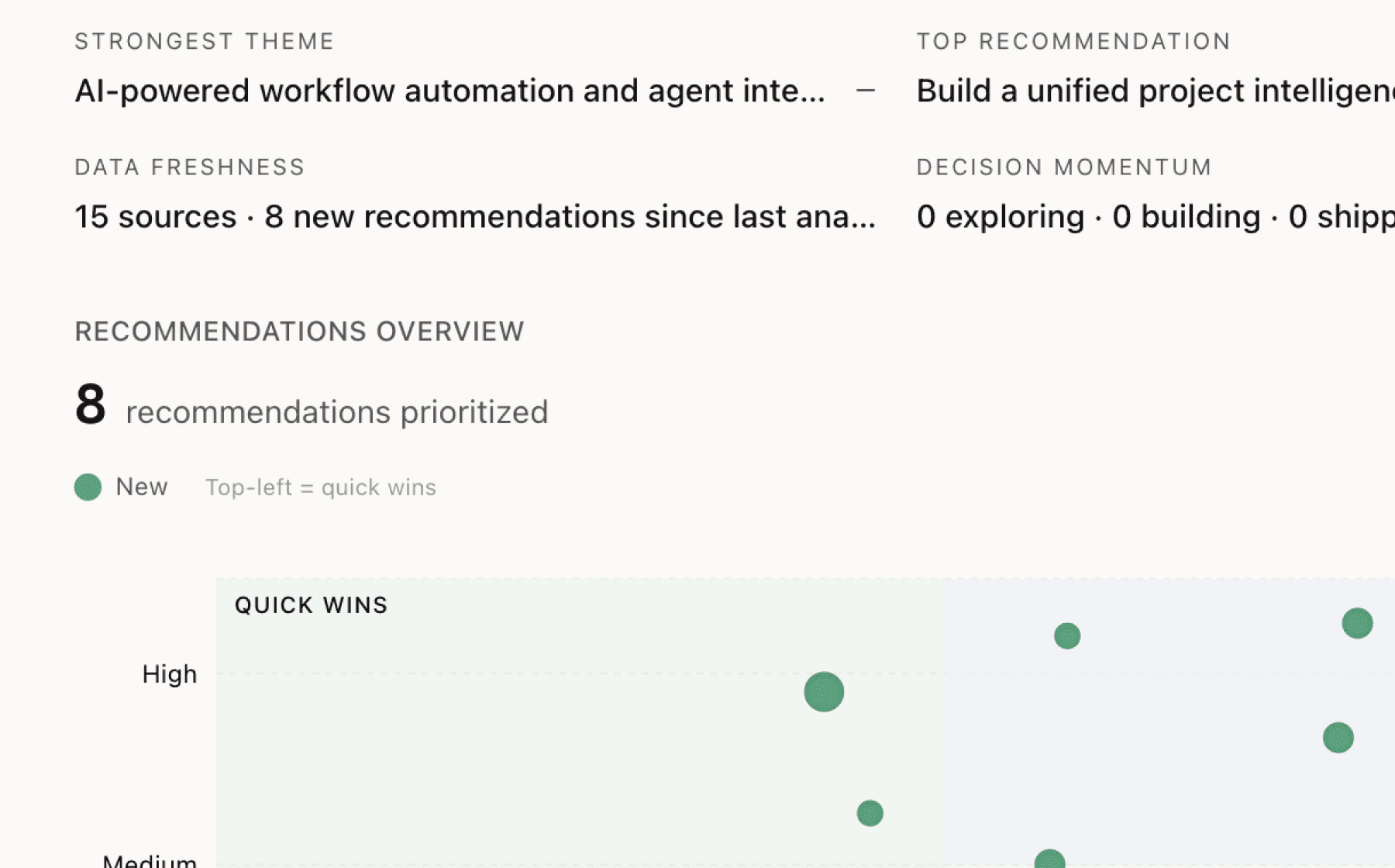
Evidence-backed insights
Every insight traces back to real customer signals. No hunches, no guesses.
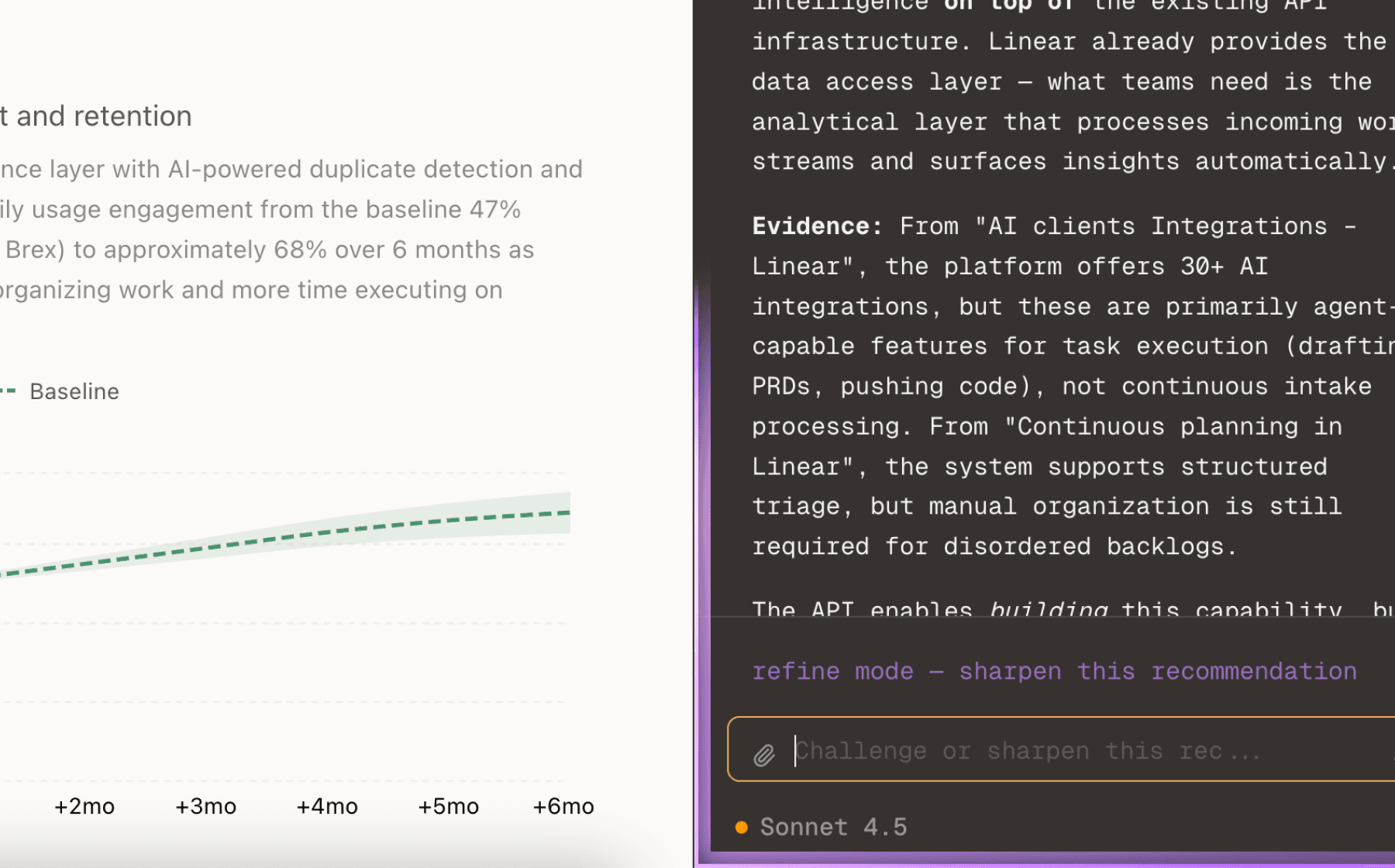
Chat with your data
Ask follow-up questions, refine recommendations, and capture business context through natural conversation.
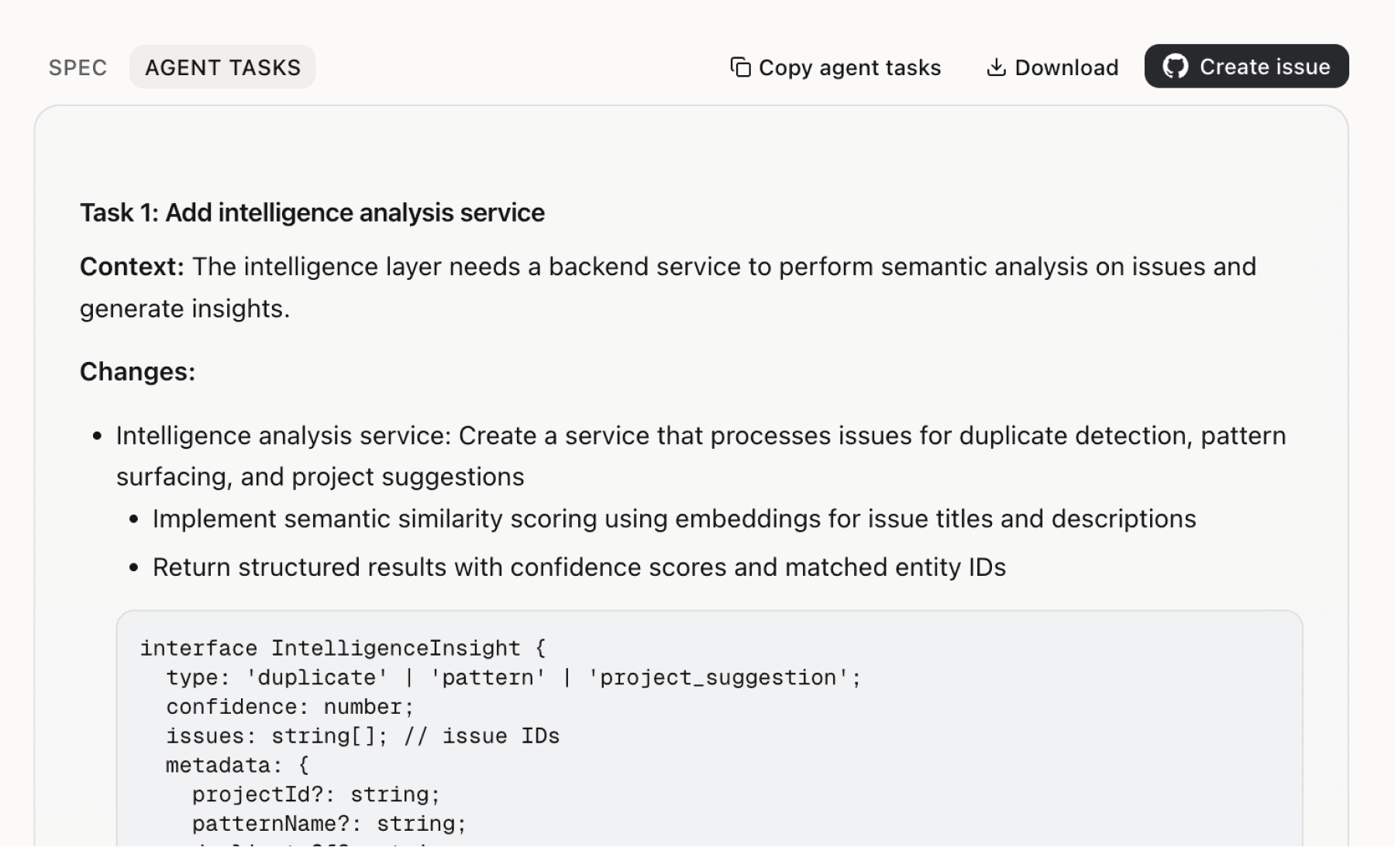
Specs your agents can ship
Go from insight to implementation spec to code-ready tasks in one click.
This analysis used public data only. Imagine what Mimir finds with your customer interviews and product analytics.
Try with your dataMore recommendations
5 additional recommendations generated from the same analysis
Three sources identify telehealth recording limitation to browser-based platforms as a high-severity issue that restricts use cases. Clinics using Zoom Desktop Client or Teams desktop apps cannot use the recording feature at all, creating a binary adoption barrier that excludes entire user segments.
The product addresses three critical clinic pain points including reducing insurance claim denials, but this validation happens through a separate Reclaim feature that audits charts before submission. This creates a gap between note generation and claim optimization where clinicians may finalize documentation that will later require revision.
Setup requires installing the Chrome extension, enabling explicit permissions in EHR settings, and completing multiple configuration steps. Two sources identify this as a friction point, and while severity is marked low, this directly impacts initial adoption velocity and time-to-value for new users.
The dictation feature provides a fallback when session recording isn't possible, appearing in three sources as a medium-severity capability. However, the compliance and claim optimization features that strengthen recorded session notes may not apply equally to dictated notes, creating a quality gap between the two input methods.
The Chrome extension provides quick access through a sidebar orb that appears in the browser and can be positioned by the user. Three sources describe this integration as reducing friction for browser-based access. However, compliance verification like consent validation and recording status confirmation may require opening the full interface rather than providing at-a-glance indicators.
Insights
Themes and patterns synthesized from customer feedback
A dictation feature allows clinicians to generate notes without recording sessions, supporting workflows where session recording isn't possible. This feature uses natural speech input without requiring punctuation commands.
“Dictate feature allows clinicians to generate notes without recording when session recording isn't possible”
The product offers Chrome extension installation with sidebar orb and optional pinning to browser toolbar, providing quick access within the user's existing browser environment. Setup requires explicit permission enabling in EHR settings.
“Chrome extension installation and pinning workflow for easy access to Perspectives in browser toolbar”
The AI note generation feature understands clinical language and mental health terminology natively, reducing the need for manual correction or reformatting of clinically accurate but colloquial speech patterns.
“Understands clinical language and mental health terminology built-in”
Users must install and enable the Chrome extension, configure EHR settings, and complete explicit permission workflows for first use. Demo booking and personalized onboarding support are available but the configuration burden could slow initial adoption.
“Demo booking and personalized onboarding support available for users with questions”
Patient consent documentation for session recording is a required compliance step that creates friction in the intake process. The product provides templates and multiple consent options (intake form, verbal, or combined), but this remains a pain point requiring explicit management by clinicians.
“Obtaining and documenting patient consent before recording sessions is a required compliance step”
Recording functionality only works with browser-based telehealth platforms (Google Meet, Zoom browser, Microsoft Teams) and not with desktop applications like Zoom Desktop Client. This technical limitation prevents use in clinics that prefer or require desktop app deployments.
“Perspectives only works for telehealth in same browser, not with desktop apps like Zoom Desktop”
The product maintains SOC 2 Type II and HIPAA compliance certifications with 93 documented security controls across access, data, application, infrastructure, and incident response. This security posture supports enterprise customer requirements and reduces adoption friction related to healthcare data handling concerns.
“Perspectives Health maintains SOC 2 Type II and HIPAA compliance certifications”
The product has been adopted by 9+ established behavioral health programs including named organizations like Sana Lake, Summit Estate, Fortitude, and Journey Lite, demonstrating traction and market fit within the target user segment.
“Product is adopted by 9+ established behavioral health programs including Sana Lake, Summit Estate, Fortitude, and Journey Lite”
Users demonstrate high product dependency with daily usage patterns and strong emotional attachment to the platform. The product's core value proposition—reducing documentation time from 30 minutes to 2 minutes per session—directly addresses clinician work-life balance and after-hours charting burden, creating measurable engagement gains.
“I use it all day every day.”
The product directly tackles behavioral health clinic operational challenges: reducing insurance claim denials, securing more approved days of care, and improving payer compliance documentation. Claims audit and form auto-fill features optimize language for JCO, CARF, and payer requirements before submission.
“Product addresses three core problems: saving time, reducing insurance claim denials, and securing more approved days of care for behavioral health providers”
Run this analysis on your own data
Upload feedback, interviews, or metrics. Get results like these in under 60 seconds.