What Return Signals users actually want
Mimir analyzed 14 public sources — app reviews, Reddit threads, forum posts — and surfaced 10 patterns with 6 actionable recommendations.
This is a preview. Mimir does this with your customer interviews, support tickets, and analytics in under 60 seconds.
Top recommendation
AI-generated, ranked by impact and evidence strength
Build proactive SMS check-in capability as the core product experience
High impact · Large effort
Rationale
The data shows 60-73% response rates to post-purchase SMS check-ins, with 71% of return requests converted to exchanges and 4.2x ROI. This intervention happens at the critical moment when customers are uncertain but haven't locked into return decisions yet. 847 returns were prevented in 30 days through this channel alone.
SMS reaches 100% of customers versus 33-36% for app notifications, and two-way dialogue surfaces unknown issues within 24 hours. This velocity and reach enables the timely intervention that drives the business impact. The perception shift from friction to care is the competitive moat — customers experience proactive outreach as support, not intrusion.
Prioritizing this capability delivers directly on the primary metric of engagement and retention. The 3x repeat purchase rate from satisfied customers and $31.2K monthly cost savings demonstrate clear business value. This is the engine that moves retention metrics.
Projected impact
The full product behind this analysis
Mimir doesn't just analyze — it's a complete product management workflow from feedback to shipped feature.
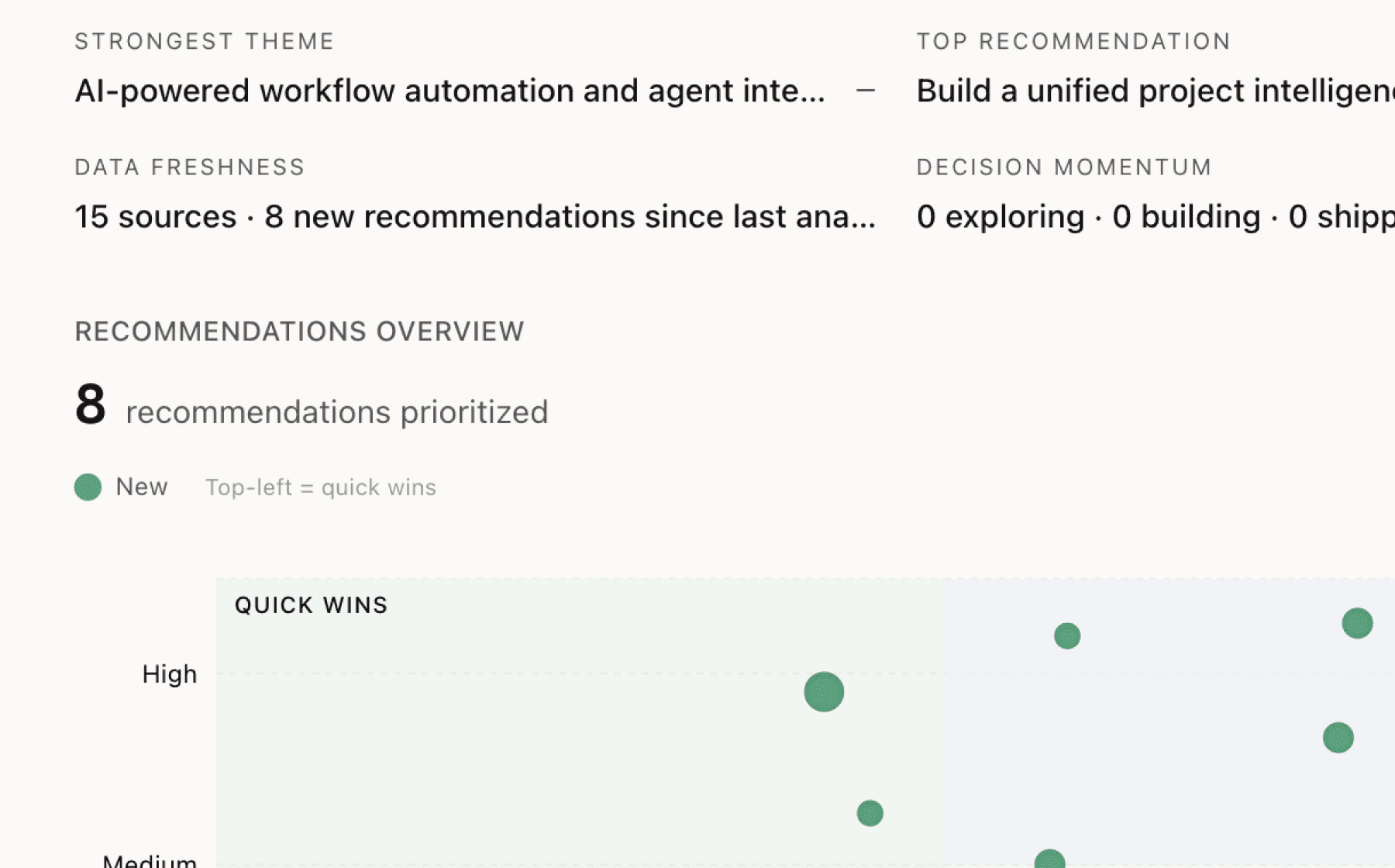
Evidence-backed insights
Every insight traces back to real customer signals. No hunches, no guesses.
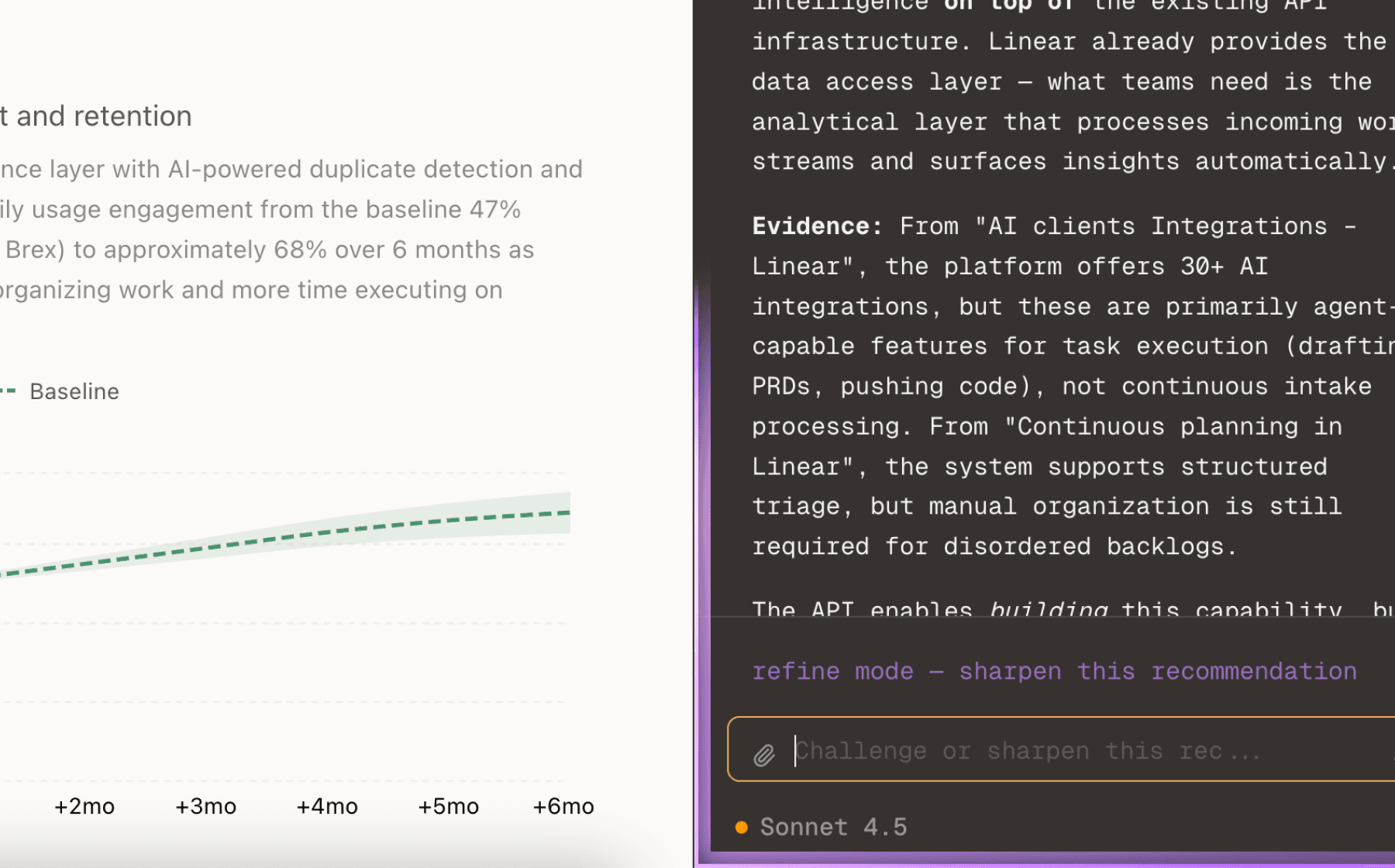
Chat with your data
Ask follow-up questions, refine recommendations, and capture business context through natural conversation.
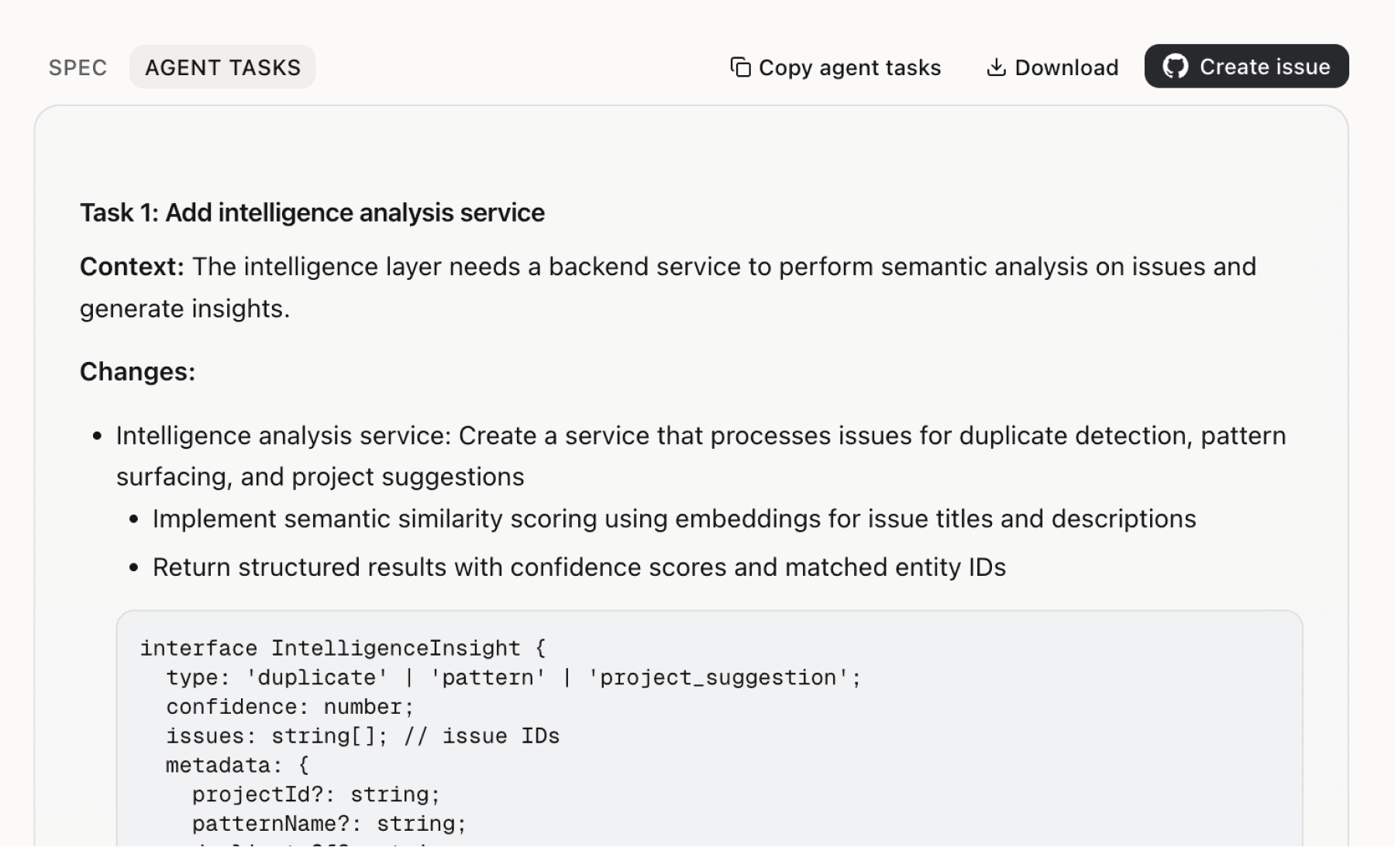
Specs your agents can ship
Go from insight to implementation spec to code-ready tasks in one click.
This analysis used public data only. Imagine what Mimir finds with your customer interviews and product analytics.
Try with your dataMore recommendations
5 additional recommendations generated from the same analysis
Returns data contains signals about fit problems (39-60% of apparel returns), visual mismatches (28%), and SKU confusion that current support models miss. The platform already collects this through return evidence processing and customer conversations, but the value multiplies when brands can act on patterns to prevent future returns.
The no-refund policy on cancellation creates friction for cost-conscious brands testing the service, particularly when the product promises measurable ROI. This policy conflicts with the flexible upgrade/downgrade approach and creates unnecessary churn risk during the critical evaluation window.
Customer skepticism toward AI in support runs high — the data shows significant preference against AI in customer service. This stems from AI being deployed as a gatekeeper to reduce support costs rather than as a tool that enables better experiences. The platform's differentiation is using AI to enable proactive engagement that humans couldn't scale.
The ROI story is compelling — $23,513 net impact from $7,450 program cost, 847 returns prevented, $31.2K monthly savings — but product managers and founders need to see how these numbers translate to their specific business. A calculator that inputs their order volume, return rate, and average order value projects ROI before they commit.
The platform already implements strong security — SOC 2 Type II, TLS 1.3, AES-256, zero retention agreements with AI providers. But return decisions are retained indefinitely while return evidence has 90-day default retention. Privacy-conscious brands may want shorter windows or explicit control over what persists.
Insights
Themes and patterns synthesized from customer feedback
Website and content strategy center on preventing returns and building loyalty rather than processing them, with dedicated sections on ROI, security, privacy, and terms. This narrative supports user confidence in the platform's intent and capability.
“Moving from reactive to proactive support models in post-purchase experience represents a shift in e-commerce customer experience strategy”
The platform's no-refund-on-remaining-balance cancellation policy and immediate termination rights for various breaches create friction, particularly for cost-conscious small brands testing the service. This operational constraint conflicts with flexible plan change policies.
“No refunds issued for remaining time in current billing period upon cancellation, creating customer friction.”
The platform offers immediate upgrades and end-of-period downgrades, 30-day notice for pricing changes, and clear self-service plan management. This flexibility supports customer retention for users adjusting service levels.
“EU customers expressly waive statutory right of withdrawal for digital services under Consumer Rights Directive upon account activation.”
The platform implements SOC 2 Type II certification, TLS 1.3 encryption, AES-256 storage, and zero data retention agreements with third-party AI providers. Privacy commitments include explicit non-sale guarantees, user access/deletion rights, and compliance with GDPR and CCPA.
“Platform automatically collects usage data, device info, log data, and analytics via Google Analytics 4, PostHog, and Datadog RUM”
The platform surfaces patterns in returns, complaints, and customer behavior through dashboards and return evidence processing, enabling brands to identify product defects and refine sizing guidance, fit descriptions, and marketing accuracy for future prevention.
“Platform prevents returns through four methods: check-in conversations, follow-up messaging, support resolution with fit/styling guidance, and return route with photo verification.”
SMS achieves higher reach than app notifications (100% vs. 33-36%) and enables two-way dialogue that surfaces unknown customer issues within 24 hours of proactive check-ins. This native channel drives the high engagement velocities and response rates that enable timely intervention.
“App push notification opt-in rates for shopping apps”
Customer skepticism toward AI in support stems from using it as a cost-cutting gatekeeper. The platform addresses this by positioning AI as a genuine helper that enhances proactive care and fit guidance, improving adoption and customer perception.
“Most AI implementations in e-commerce support simply attach AI to existing ticket queues, maintaining the reactive model rather than redesigning around proactive engagement.”
The platform uses two-way SMS communication during the critical post-purchase phase to identify and resolve fit, color, and appearance mismatches before customers initiate returns. This converts potential refunds into exchanges and repeat purchases, with 60-73% response rates, 71% exchange conversion, and 4.2x ROI.
“AI-powered post-purchase messaging for apparel brands can increase retention, reduce returns, and improve margin through proactive high-touch customer experience.”
Returns are driven by preventable issues like fit problems (39-60% of apparel) and visual mismatches (28%), which can be resolved through early engagement in the post-purchase journey before purchase regret solidifies. This addresses a gap created by frictionless returns policies that eliminated traditional intervention opportunities.
“The return decision process begins before the actual return initiation, suggesting earlier intervention opportunities in customer journey”
The platform demonstrates measurable business impact with 78% engagement reply rates, 3x higher repeat purchases from satisfied customers, $31.2K monthly cost savings, and conversion of 847 returns to exchanges in 30 days. This directly improves retention metrics and prevents revenue loss.
“78% reply rate from customers with issues engaged, letting company offer exchanges”
Run this analysis on your own data
Upload feedback, interviews, or metrics. Get results like these in under 60 seconds.