
What Terminal Use users actually want
Mimir analyzed 1 public source — app reviews, Reddit threads, forum posts — and surfaced 13 patterns with 8 actionable recommendations.
This is a preview. Mimir does this with your customer interviews, support tickets, and analytics in under 60 seconds.
Top recommendation
AI-generated, ranked by impact and evidence strength
Create a self-serve quick-start experience that demonstrates stateful iteration value within 5 minutes
High impact · Medium effort
Rationale
The platform's core differentiator is stateful iteration with checkpoint forking and seamless task migration, yet there's no evidence developers understand this value before signing up. The free hobby tier provides a low-friction entry point, but without experiencing the iteration capabilities firsthand, developers may not grasp why this platform differs from standard hosting.
A guided quick-start that walks users through forking from a checkpoint, testing a fix in dev, and shipping to production would make the abstract concept concrete. This directly addresses the growth question by converting more trial users into engaged users who understand the product's unique value.
The CLI-first design is already developer-friendly, so building on that foundation with a tutorial flow that uses actual agent tasks (not toy examples) would reduce time-to-value and increase conversion from hobby to paid tiers.
Projected impact
The full product behind this analysis
Mimir doesn't just analyze — it's a complete product management workflow from feedback to shipped feature.
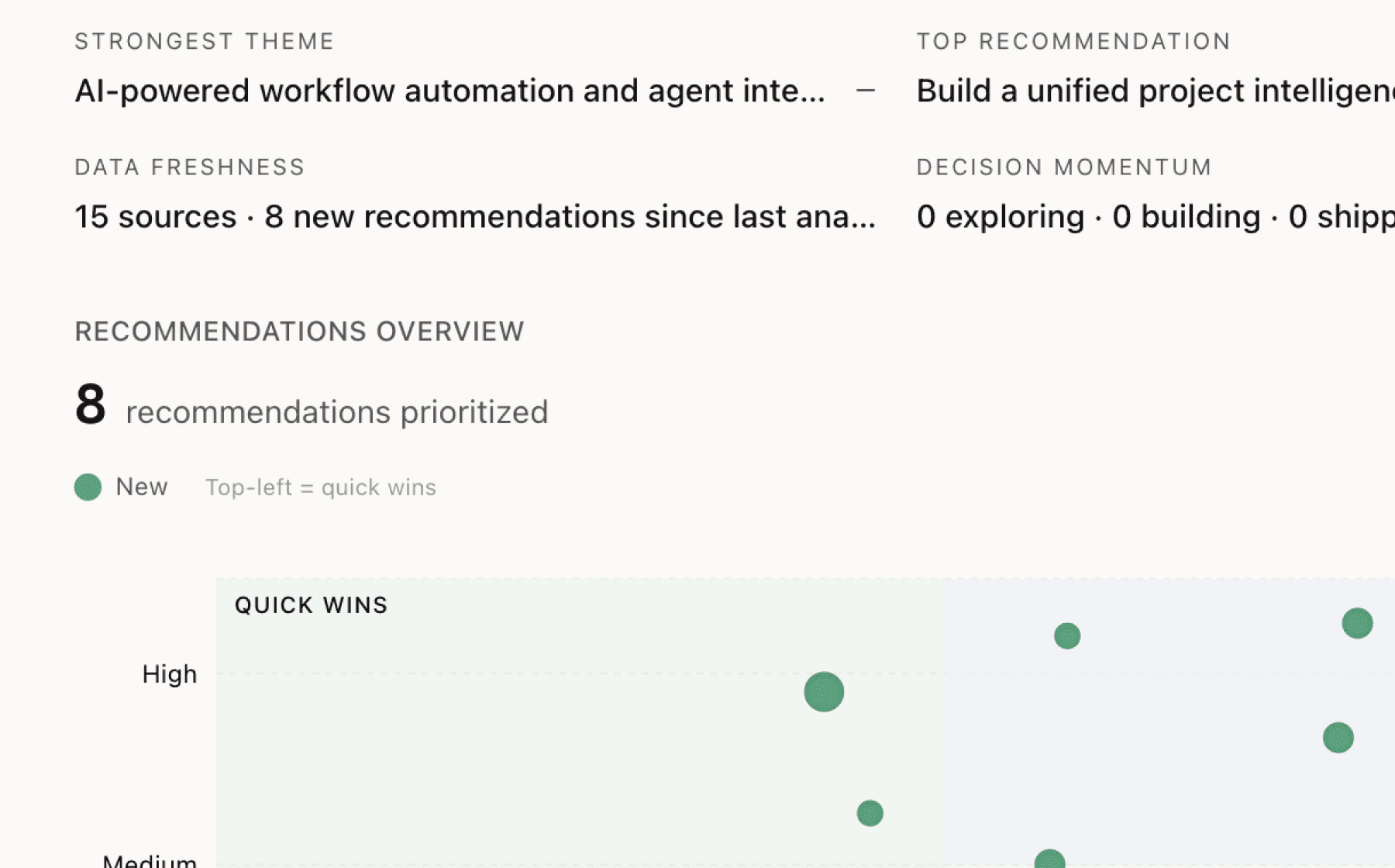
Evidence-backed insights
Every insight traces back to real customer signals. No hunches, no guesses.
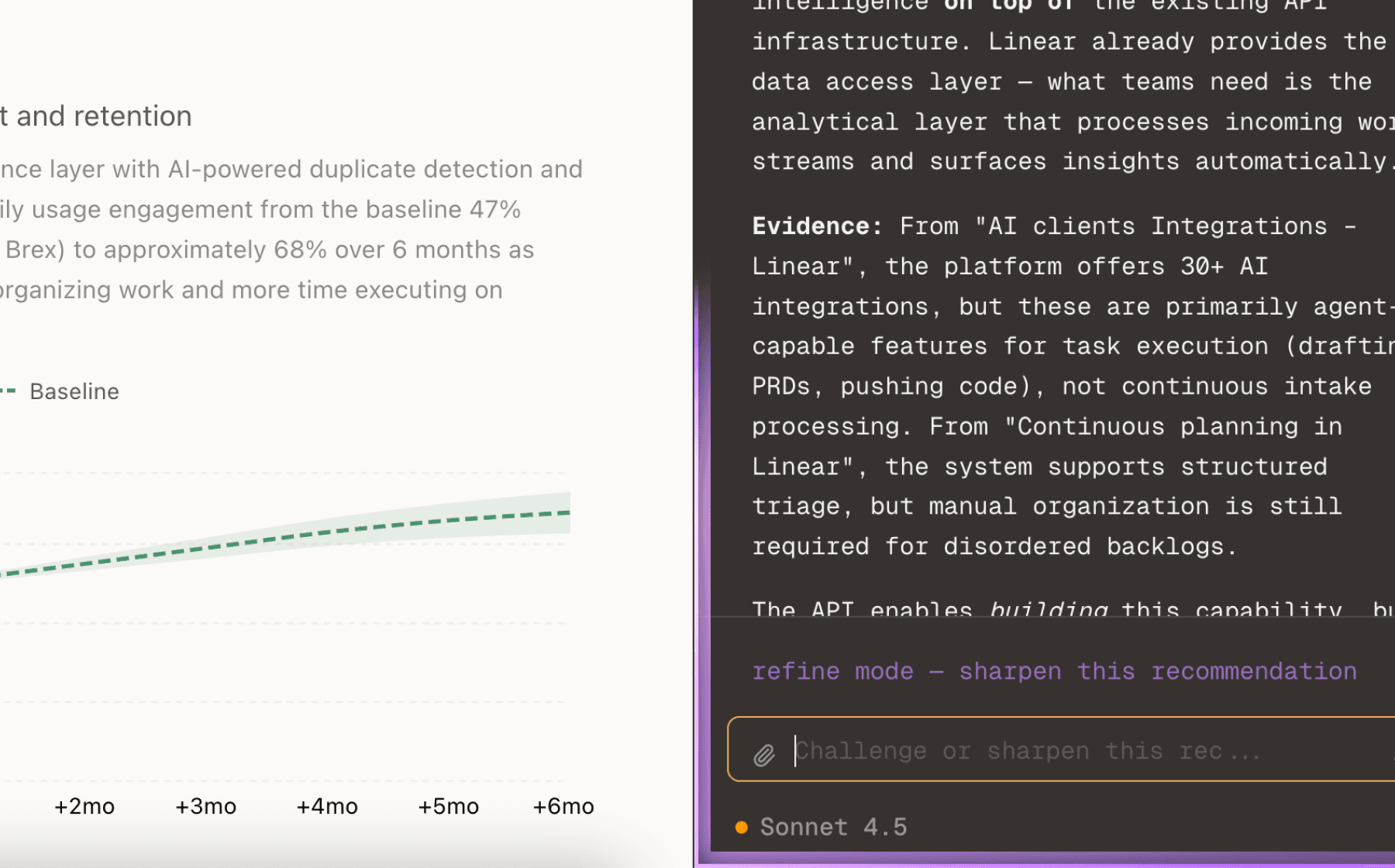
Chat with your data
Ask follow-up questions, refine recommendations, and capture business context through natural conversation.
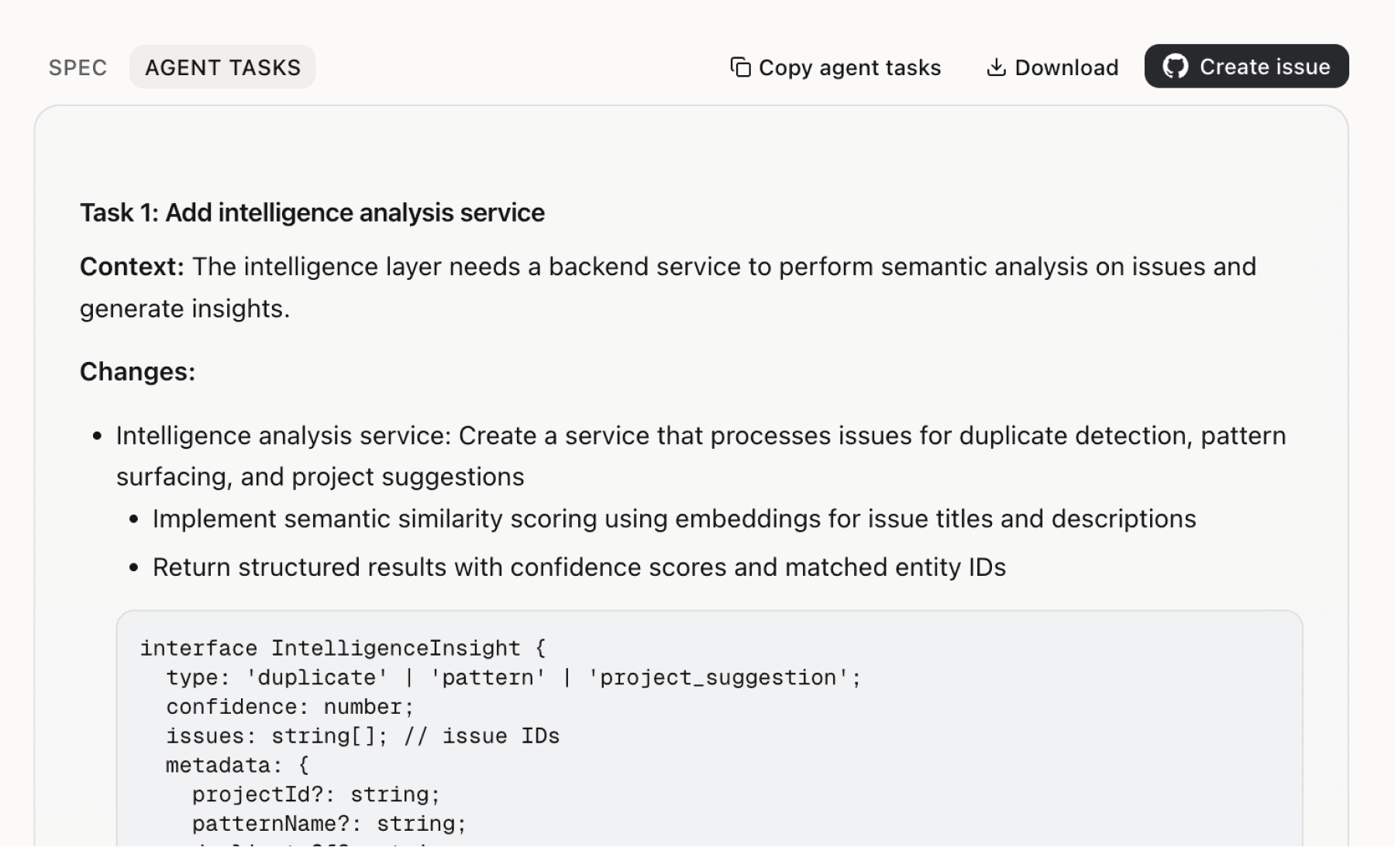
Specs your agents can ship
Go from insight to implementation spec to code-ready tasks in one click.
This analysis used public data only. Imagine what Mimir finds with your customer interviews and product analytics.
Try with your dataMore recommendations
7 additional recommendations generated from the same analysis
The platform supports multiple languages and frameworks, but there's no indication developers can quickly see how to implement common agent patterns in their preferred stack. Generic documentation creates friction because developers must translate abstract concepts into their specific context.
Built-in observability features like automatic log collection, task replay, and performance metrics are strong technical capabilities, but they're only accessible through the CLI. Engineering managers, DevOps teams, and other stakeholders who need visibility into agent performance may not use the CLI regularly.
Multiple trigger methods including webhooks provide flexibility, but there's no evidence developers can quickly connect the platform to their existing workflows. The gap between 'webhooks are supported' and 'here's how to trigger agents when a PR is opened' is significant.
The platform addresses real complexity (stateful iteration, filesystem management, environment workflows) but there's no evidence prospective users understand why they shouldn't just deploy agents on their own infrastructure. Developers default to building rather than buying unless the value proposition is crystal clear.
The tiered pricing structure provides clear upgrade paths, but there's no indication developers receive proactive guidance about their usage patterns. Developers who hit the 1,000 task limit on Starter may churn rather than upgrade if they don't understand what's driving their usage or how to optimize.
The platform supports enterprise security with multi-tenant isolation and RBAC, but there's no evidence of collaboration primitives beyond access control. Engineering teams debugging agent behavior need to share specific filesystem states and task executions, not just grant broad access.
The tiered pricing is straightforward, but developers evaluating the platform need to understand what their actual costs will be before committing. Task count and filesystem storage are abstract units without context about typical usage patterns.
Insights
Themes and patterns synthesized from customer feedback
Support for API/SDK, CLI, webhooks, and scheduled tasks means developers can integrate agents into existing workflows without rearchitecting. This flexibility reduces adoption friction by meeting developers where they already work.
“Multiple trigger methods supported: API/SDK, CLI, webhooks, and scheduled (cron) tasks for flexibility”
A hobby tier with 1 GB storage and 100 tasks/month at no cost provides a low-friction entry point for individual developers and small teams. This freemium model can support new user growth by allowing developers to evaluate the platform before committing to paid plans.
“Hobby tier pricing with 1 GB filesystem storage and 100 tasks/month for free”
Per-task filesystem configuration, read-only shared resource mounting, and user choice over which folders to mount enable agents to work with diverse data and storage patterns. This flexibility reduces constraints on how developers architect their agent solutions.
“Flexible filesystem mounting: define per-task filesystem config, mount shared resources read-only, allow users to choose which folders to mount”
True multi-tenant isolation, encrypted secrets, fine-grained RBAC, and workload identity enable the platform to meet enterprise security requirements without shared credentials. These capabilities help establish trust with engineering teams and corporate buyers, reducing procurement friction.
“Enterprise-grade security includes true multi-tenant isolation, encrypted secrets, fine-grained RBAC, and workload identity without shared credentials”
Automatic log collection, task history and replay, performance metrics, and real-time log streaming eliminate the need for external monitoring tools. This integrated observability lowers the operational barrier for teams managing background agents and aligns with the platform's focus on debugging and analysis.
“Built-in observability features: automatic log collection, task history & replay, performance metrics, real-time log streaming without external tooling”
Per-environment versions, environment-specific secrets, and branch-based routing allow teams to safely manage staging, preview, and production environments with different configurations. This supports the organization needs of engineering teams managing multiple deployment stages.
“Multi-environment support (prod, staging, preview) with per-environment versions, environment-specific secrets, and branch-based routing”
Native Vercel AI SDK support with real-time message streaming allows frontend developers to build applications on top of background agents with minimal integration effort. This expands the addressable developer audience beyond backend engineers.
“Native Vercel AI SDK integration with real-time message streaming for frontend applications”
Dedicated VMs with persistent storage across tasks and no execution time limits eliminate common constraints of serverless platforms. This removes friction for developers running long-running background agents and simplifies capacity planning.
“Dedicated VMs with no cold starts, no time limits, and persistent storage across tasks”
Starter tier at $19/month with 5 GB and 1,000 tasks/month, and Pro tier at $199/month with 50 GB and unlimited tasks provide clear upgrade paths. This structure allows developers to scale as their usage grows, potentially supporting revenue retention as users expand their agent usage.
“Starter tier pricing at $19/month with 5 GB filesystem storage and 1,000 tasks/month”
Support for Python, Node.js, Go, and multiple frameworks with any model allows developers to work in their preferred environments. This reduces friction for developers from different backgrounds and technical communities.
“Supports multiple programming languages (Python, Node.js, Go) and frameworks with any model”
The platform enables developers to fork from checkpoints, test fixes in dev, and ship corrections to production while preserving filesystem snapshots and conversation history. This eliminates manual filesystem state management and allows seamless migration of active tasks across versions, lowering the operational burden of iteration and debugging.
“Platform enables iteration without managing filesystem state: ship bug fixes, migrate active tasks to new versions seamlessly, handle breaking changes”
The CLI-first interface allows developers to build, deploy, and manage agents directly from the terminal, with optional automatic management by coding agents. This reduces context switching and fits naturally into developer workflows, making the platform more accessible to technical users.
“CLI-first design allows developers to build, deploy, and manage agents from terminal or let coding agents do it automatically”
The platform supports a wide range of agent types spanning code generation, ML operations, document processing, security, research, financial modeling, and DevOps. This breadth positions the platform to serve multiple developer segments and use cases, but may require targeted messaging and documentation to help each segment understand relevance.
“Platform supports multiple agent types: code generation, RL graders, document processing, security audits, research, financial modeling, DevOps, and custom workflows”
Run this analysis on your own data
Upload feedback, interviews, or metrics. Get results like these in under 60 seconds.